Gating Educational Resources Without Funnel Bloat
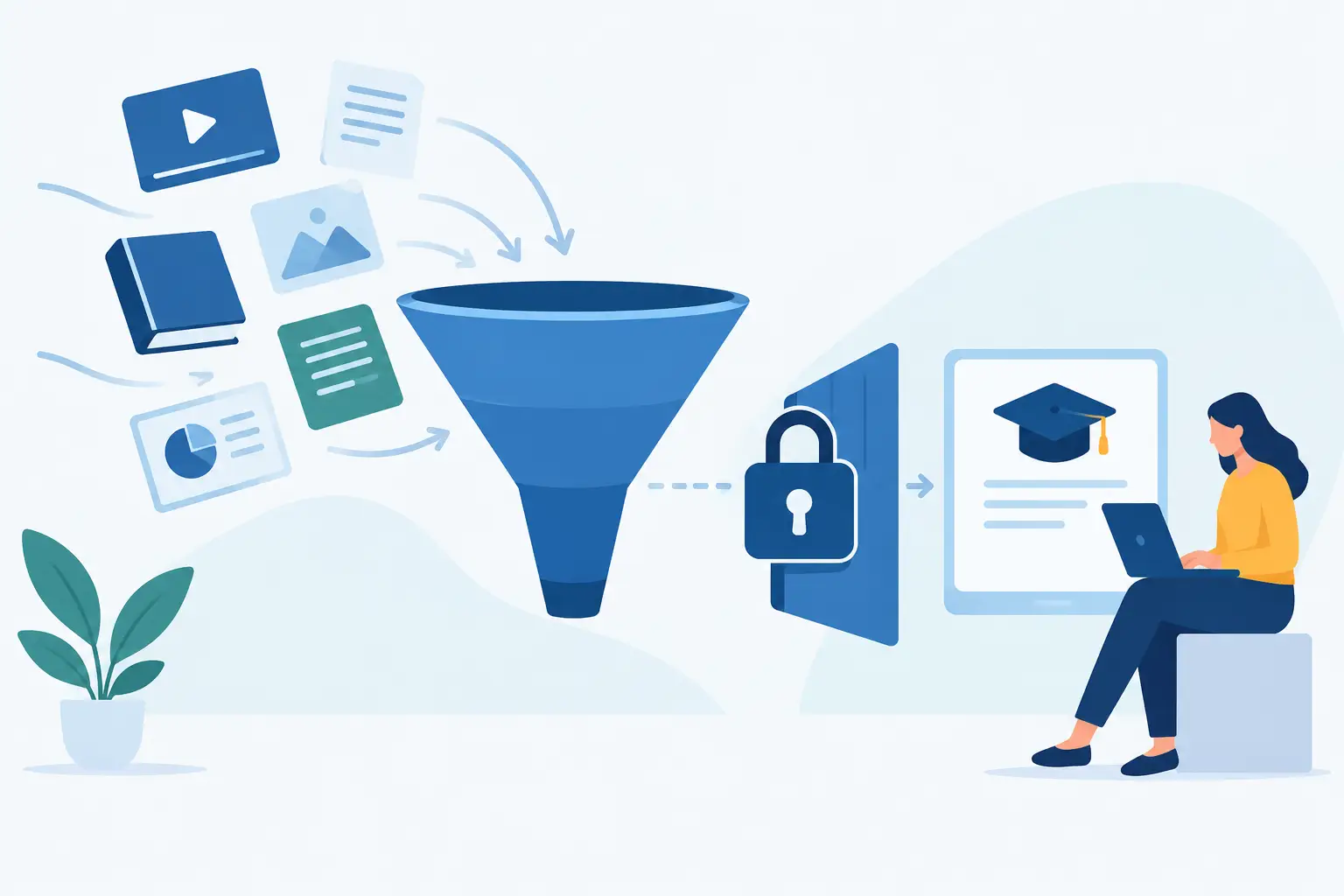
A useful checklist under a video can get saved hundreds of times. A template shared in a social bio can earn real attention. But if people can take the resource and disappear, that attention never becomes an audience. Gating educational resources gives your best practical work a second job: helping people while creating a direct way to stay in touch.
The mistake is treating that job like a full funnel project. You do not need a maze of pages, automations, tags, and delivery emails to collect an email address for a genuinely useful resource. You need a clear exchange, a page worth visiting, and a simple way to publish it where your audience already finds you.
What Gating Educational Resources Actually Means
A gate is simply an email opt-in placed in front of a resource. Someone sees the promise, enters an email address, and gets access to the material. The material might be a lesson plan, swipe file, spreadsheet, starter guide, workshop notes, reading list, or collection of useful links.
The point is not to make information scarce. Most of your public content should still teach freely. The gate belongs around resources that make the next step easier: a structured version of your ideas, a reusable tool, a concentrated set of examples, or supporting material that saves someone time.
That distinction matters. If every short post asks for an email address before it delivers any value, people stop trusting the exchange. If a public post gives a useful insight and points to a practical resource, the opt-in feels fair. The audience has already seen how you think. The gated resource gives them a reason to continue.
For creators and lean teams, the real value is ownership. Social reach is rented. A platform can reduce distribution, change its format, or bury an old post. An email list gives you a direct line to people who raised their hand for a topic you teach.
Gate the Resource, Not Every Idea
The best lead magnets are specific. They solve a small, recognizable problem for a defined person. A broad PDF called “The Complete Business Guide” asks too much belief from a new visitor. A resource called “12 Client Onboarding Emails for Independent Consultants” tells the reader exactly what they will get and whether it applies to them.
Educational resources tend to perform well when they reduce effort. Think checklists that prevent missed steps, templates that remove blank-page anxiety, examples that show what good looks like, and curated materials that cut research time. These assets are easy to understand in a few seconds.
A good test is simple: would someone be relieved to have this before they start a task? If the answer is yes, it may be worth gating. If it is merely a repackaged blog post or a vague collection of opinions, publish it openly instead.
There is a trade-off. A gate can increase lead capture, but it adds friction. That friction is justified when the resource has enough practical value to earn an email address. It is less justified for a two-minute read or a single tip. Keep the gate proportional to the payoff.
Make the promise concrete
Your resource page should answer three questions fast: What is this? Who is it for? What will it help me do? Avoid inflated claims. “A simple worksheet for planning a four-email welcome sequence” is stronger than “Transform your email marketing.”
Show the shape of the resource, too. A cover image, a few preview images, a short description of the included materials, and a clear title do more work than paragraphs of conversion copy. People should not have to decode the offer.
Write Once, Then Publish Where Attention Already Exists
Most lead generation systems create work before they create results. First comes the landing page. Then the form. Then the file host. Then delivery rules. Then integrations. Then a dashboard that needs its own tutorial.
That is backwards for a publisher. Start with the resource page. Write the material. Add the supporting files or images. Publish it. Then share one link anywhere your content already earns attention.
Put the link in a video description when the resource expands on the video. Add it to a social profile when it is relevant to your core topic. Mention it in a podcast episode, a webinar follow-up, a newsletter issue, or the final slide of a presentation. Each placement should make contextual sense. A generic “freebie” link is easy to ignore. “Get the exact planning sheet I used here” is not.
One resource can also travel farther than a single post. A consultant can create a client discovery checklist, mention it in LinkedIn posts about sales calls, and include it after speaking engagements. An educator can publish a lesson companion and share it below related videos for months. The resource becomes durable infrastructure for existing content.
Sublead.io is built around this publishing-first workflow: create a resource page, publish a shareable link, and collect the emails without assembling a funnel stack.
Match the resource to the source
The closer the match between content and resource, the better the lead quality. A person watching a video about pricing is more likely to opt in for a pricing calculator than a general newsletter guide. They know why they want it, and you know what they care about.
This also makes follow-up easier. If you later send an email, refer back to the problem that brought them in. Offer a related example, answer a common question, or share the next useful resource. Relevance beats volume.
Keep the Opt-In Page Light
A resource page is not a sales page. Its job is to help a visitor decide whether the material is worth requesting. Too many sections, too many calls to action, and too many competing offers slow that decision down.
Use a direct title. Add a short explanation of the outcome. Show what is included. Ask for the minimum information needed to deliver access. For most creators, that means an email address. Asking for a company name, job title, budget, phone number, and project timeline may produce fewer submissions and does little for a simple educational download.
Minimal forms are not just about conversion rate. They respect the relationship. You are asking for permission to contact someone. In return, give them the thing you promised promptly and make your future emails worth opening.
Do not hide the resource behind confusing confirmation steps if you can avoid them. The faster someone reaches the material, the more credible your process feels. Delivery plumbing should stay invisible.
Collect Leads You Can Actually Use
A growing number on a dashboard is not the goal. Useful lead collection means you can see who opted in, understand which resource attracted them, and take action without waiting on an integration.
For a small business, a simple contact list and a CSV export are often enough. You can move contacts into the email tool you already use, review which topics generate interest, and decide what to publish next. Complexity becomes useful only when it supports a clear decision or a repeatable process.
Pay attention to quality signals, not just opt-in totals. If one resource earns fewer leads but starts more replies, consulting inquiries, or newsletter engagement, it may be more valuable than a broad giveaway with a high download count. The right metric depends on your business model.
A newsletter operator may care about reader retention. A coach may care about discovery calls. A creator selling digital products may care about future launch conversions. Gating educational resources is the starting point, not the whole strategy.
Build a Small Resource Library Over Time
You do not need ten lead magnets before you publish the first one. Start with the resource closest to your strongest existing content. Once it is live, notice the questions people ask, the posts that get saved, and the places where your audience gets stuck. Those signals tell you what to create next.
Over time, a small library can serve different stages of interest. Someone new may want a simple checklist. Someone comparing options may want examples or a calculator. Someone ready to act may want a deeper workbook or implementation guide. Keep each resource focused enough that its value is obvious.
Refresh successful resources rather than abandoning them. Update examples, improve the cover, clarify the promise, or add a missing template. A resource that keeps earning relevant subscribers is an asset. Treat it like one.
Your next lead magnet does not need a funnel map. It needs to make one useful task easier. Write it. Publish it. Put the link where the right people already pay attention. Then keep building from what they choose to request.