Email List Building Without the Funnel Builder
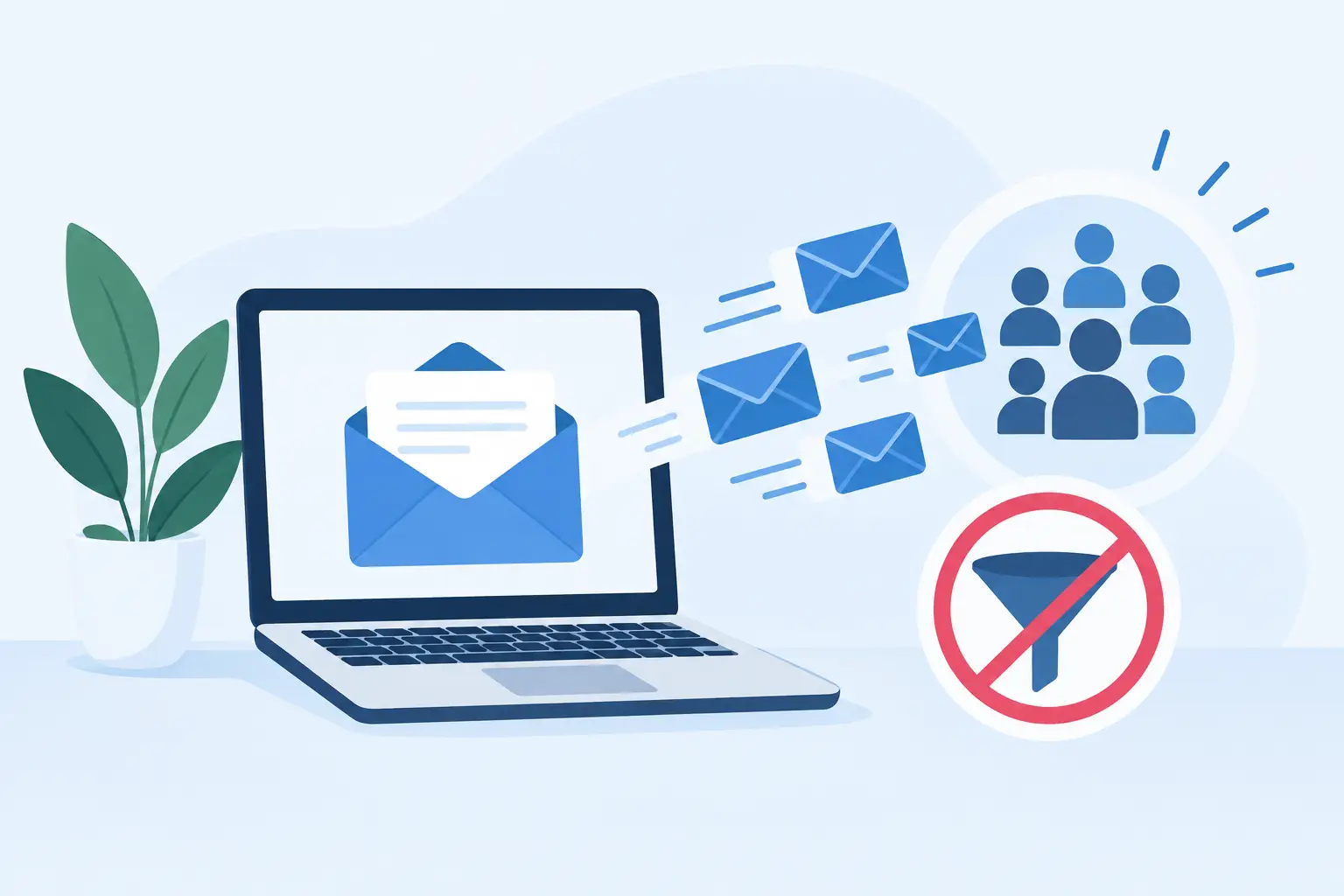
A video gets 20,000 views. A post gets saved and shared. Then the feed moves on, and most of that attention disappears with it.
Email list building changes that equation. It gives the people who found your work a simple way to stay connected, on a channel you own. But it only works when the next step feels as useful and natural as the content that earned the click.
For creators and lean teams, the goal is not to build a complicated funnel. It is to turn moments of attention into permission to follow up. Write something useful. Publish it. Collect the email address.
Why email list building gets overcomplicated
Traditional marketing software treats every lead like the beginning of a large machine. First, choose a funnel template. Then build a landing page. Connect an opt-in form. Upload a file. Set up delivery. Add tags. Create an automation. Test the whole thing.
That setup can make sense for a large sales team with multiple offers, paid traffic, and a complex buyer journey. It is often excessive for someone sharing a checklist beneath a YouTube video, a resource in a LinkedIn post, or a template in an Instagram bio.
The cost is not only money. It is momentum.
When publishing a lead magnet takes an afternoon, you make fewer of them. When every resource needs technical assembly, your best ideas stay in a draft folder. And when the process feels like funnel engineering, you postpone it until you have more time.
Most independent businesses do not need more moving parts. They need a repeatable publishing habit that captures interest while it is still warm.
Start with a resource people can use now
A lead magnet does not need to be a 40-page ebook. In fact, broad ebooks often underperform because they promise too much and help too little. The strongest resources solve one immediate problem for a specific person.
Think about the question your audience asks right before they are ready to pay, book, subscribe, or take action. Your resource should shorten the distance between that question and a useful answer.
A career coach might share a salary negotiation script. A freelance designer might offer a client onboarding checklist. A newsletter writer could publish a list of 25 subject-line formulas that match their niche. A consultant might create a one-page diagnostic that helps prospects spot a costly gap.
Specific beats impressive. A resource called “The Complete Guide to Growth” asks for too much trust. “The 10-minute client discovery call prep sheet” tells people exactly what they will get and when they can use it.
Before you build anything, pressure-test the idea with three questions: Does it solve a real recurring problem? Can someone understand the value in one sentence? Would your existing audience naturally want it after consuming your usual content?
If the answer is no, do not hide a weak offer behind a prettier page. Improve the resource first.
Email list building should follow your content
Your lead magnet should not feel like a detour. It should be the useful next piece of the content someone already chose to consume.
If you publish a video on planning a course, offer the lesson-planning worksheet mentioned in that video. If you write a post about pricing consulting work, offer the pricing calculator or proposal outline. If your newsletter explains a framework, offer the editable version.
This creates message match. The audience arrives with a clear interest, and the resource continues that exact thread. You do not need a clever popup or a vague invitation to “join the community.” You need a relevant reason to exchange an email address.
Place the link where attention already exists. Add it to a video description. Put it in your social bio. Mention it in the final paragraph of a post. Include it in a pinned comment. Share it when answering the same question for the tenth time.
One resource can work across several channels, but the surrounding language should match the context. On YouTube, reference the moment in the video. In a short social post, lead with the problem the resource solves. In a newsletter, explain why you made it. The page can stay the same. The invitation should feel native to where it appears.
Write, publish, collect
A simple process has an advantage: you will actually repeat it.
Write the page
Give the resource a clear title, a short explanation, and a useful cover image. State who it is for, what it helps them do, and what is included. Avoid vague claims such as “transform your business” or “get the secrets.” Your audience is busy. Tell them what they will receive.
Supporting materials can add value without adding clutter. Include a worksheet, a template, a short video, a curated set of examples, or a practical checklist when it supports the promise. Do not pile on extras just to make the offer seem larger.
The page is not a sales letter. It is a clear handoff between your public content and a resource worth keeping.
Publish the link
Once the page is ready, publish it and use one link everywhere it is relevant. This is where many list-building efforts fail. Creators spend time making a good resource, then mention it once and forget it exists.
Treat a lead magnet as a durable content asset. Bring it up whenever the topic comes up. Add it to evergreen content. Reuse it in future posts. If you see a recurring audience question, point people to the resource rather than rewriting the same response from scratch.
There is a trade-off here. Sharing the same link too often can feel repetitive if your content has moved on. Refresh the framing, update the resource, or create a new asset when your audience has a different need. Consistency is useful. Irrelevance is not.
Collect the contacts
Keep the form simple. For most early-stage list building, an email address is enough. Every extra field creates friction, and the information you collect should have a real purpose.
A first name can help if you plan to personalize outreach. A role, company size, or budget question may be justified for a consultant qualifying high-value inquiries. But do not ask for data because a form builder makes it available. Ask only for what improves the next interaction.
Store contacts in one reliable place and export them when you need to send an email, segment leads, or move data into another system. Sublead.io is built around that direct workflow: create a resource page, publish a shareable link, and collect leads without assembling a stack of separate tools.
Measure signal, not vanity
A large list is not automatically a valuable list. A smaller audience that opens, replies, books calls, and buys can be far more useful than thousands of passive contacts.
Start by watching a few practical signals. How many people visit the resource page? How many opt in? Which distribution channel sends the most qualified subscribers? Do new contacts engage with the next email you send?
If traffic is high and opt-ins are low, the issue is often the offer or the page message. The resource may be too broad, the benefit may be unclear, or the page may not match the content that sent people there.
If opt-ins are strong but subscribers do not engage afterward, look at the handoff. Did they receive what they expected? Is your first follow-up useful? Did you set a clear expectation for what comes next?
Do not overreact to a small sample. A resource shared in one post may not tell you much. Give it repeated distribution, then improve one variable at a time. Change the title, the promise, the placement, or the audience context. Changing everything at once only creates guesses.
The follow-up is part of the promise
Getting an email address is not the finish line. It is the point where your publishing relationship becomes more direct.
Your first email should deliver the resource or make access obvious. Then continue with the kind of help that made someone subscribe in the first place. If they joined for a client onboarding template, send advice about smoother client work. If they joined for a creator planning tool, share ideas that help them publish more consistently.
You do not need to email every day. You do need to be recognizable. A useful monthly email can outperform a rushed weekly sequence if it respects the subscriber's time and stays close to the original reason they opted in.
Build the list one useful resource at a time. The best email capture system is the one that lets you keep publishing.